Trade Winds and Westerlies
Tanguy Benoit
Filière:
Architecture d'intérieur / Espace & Communication
Diplôme:
Master en Design Espace et Communication
Tuteur·ice·x·s:
Noam ToranTrade Winds and Westerlies explore how representations of space and landscape in mainstream media transmit and construct narratives based on our conceptions of the unknown, the distant and the otherness.
This project involves cinematographic archetypes developed through the Western genre since 1939 in Hollywood, such as the importance of the horizon line in the composition of images.
The tumbleweed’s simulation:
Around 1870, American pioneers introduced a plant called "Russian thistle" into South Dakota. Once dry, this bush rolls with the wind. This invasive plant, renamed "tumbleweed", conquered all the territories from Mexico to Alaska.
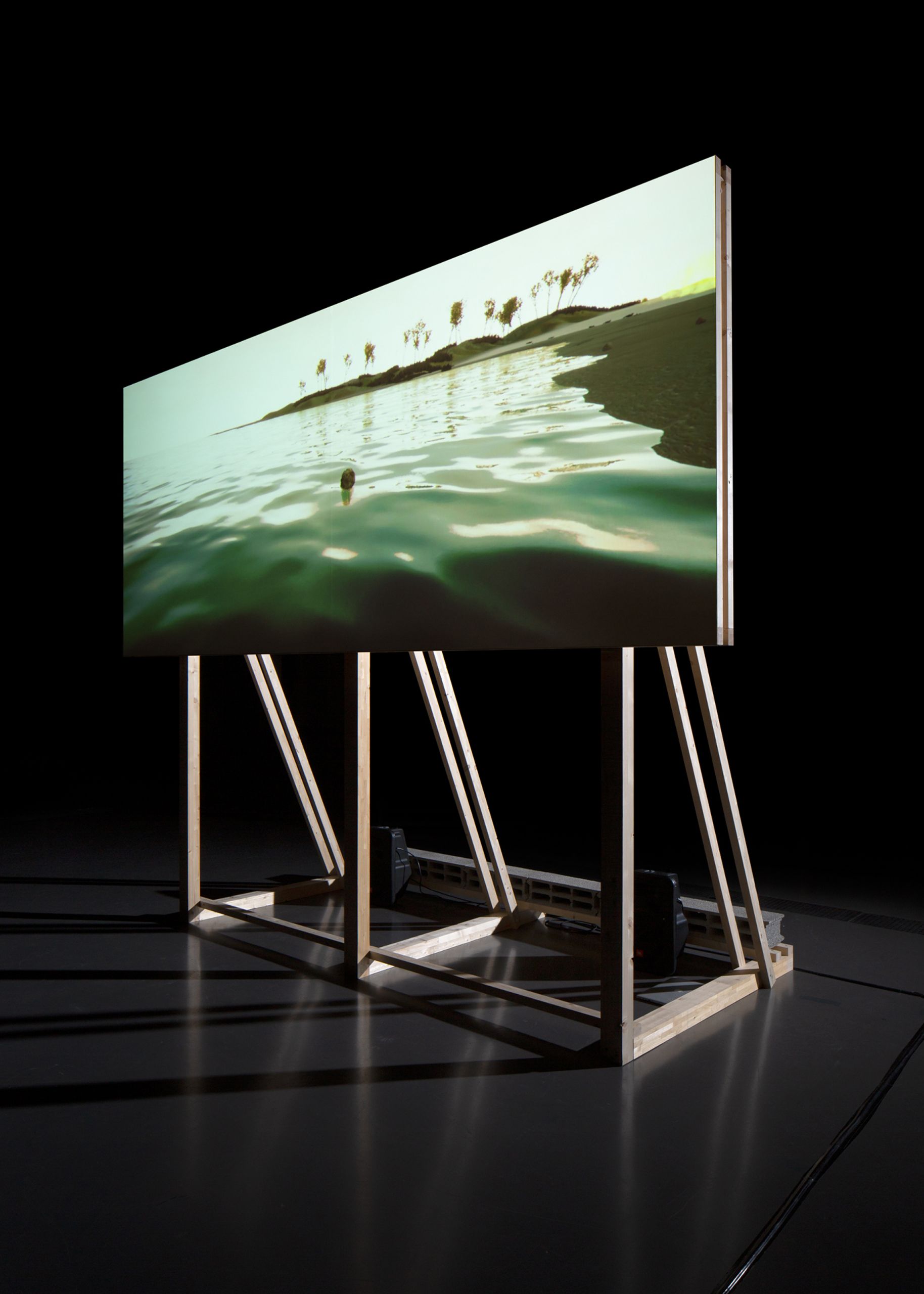
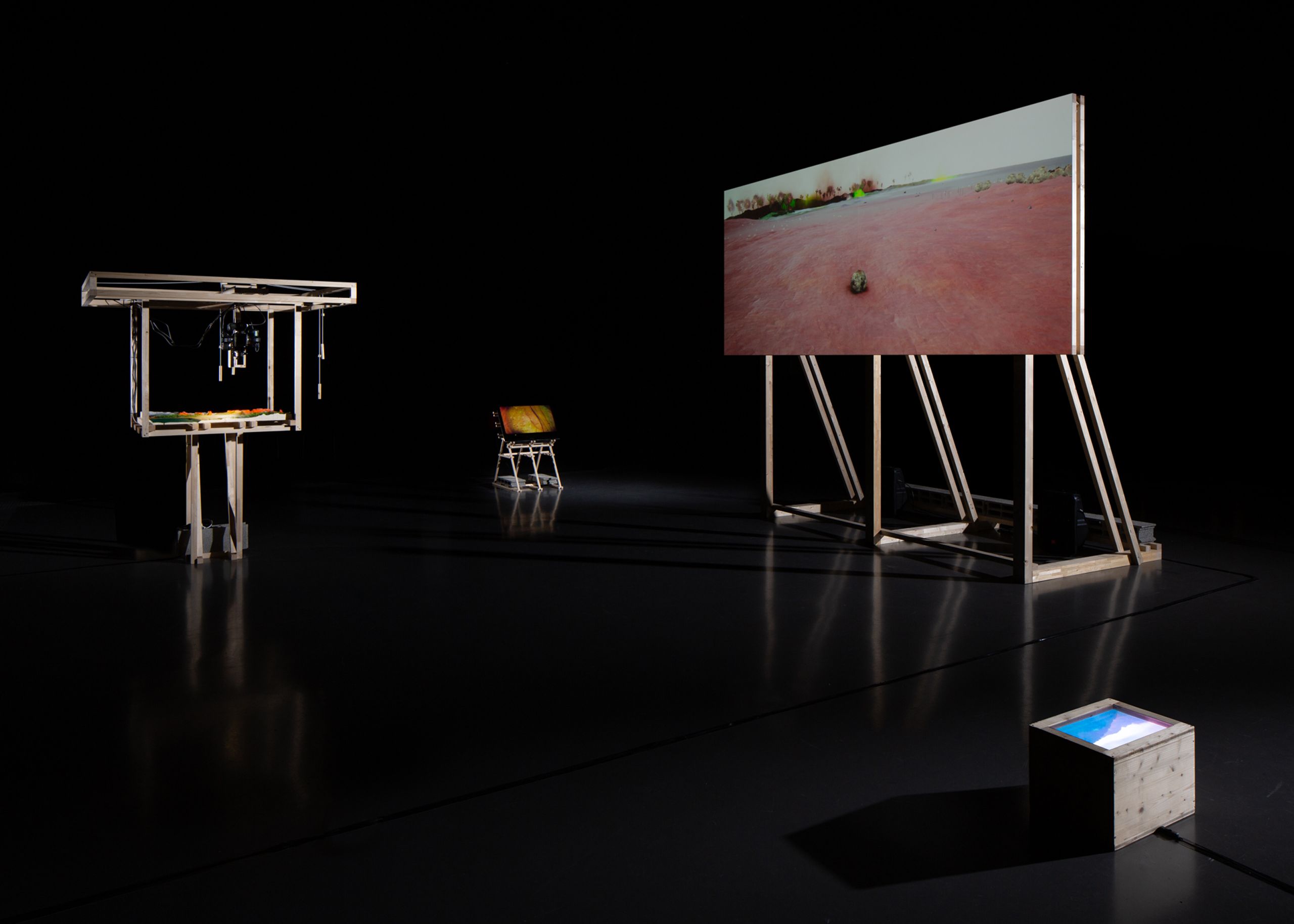
The film projected on the billboard is a simulation generated in real time by a computer program that autonomizes wind production. This climatic phenomenon allows a tumbleweed to move randomly through ecosystems. These are created from topographic data of filming locations of the movies The Searchers (J. Ford, 1956), Apocalypse Now (F. Ford Coppola, 1979) and Interstellar (C. Nolan, 2014).
This simulation proposes to reinterpret the human colonization of various spaces through the migration of a ruderal plant species.
The diorama:
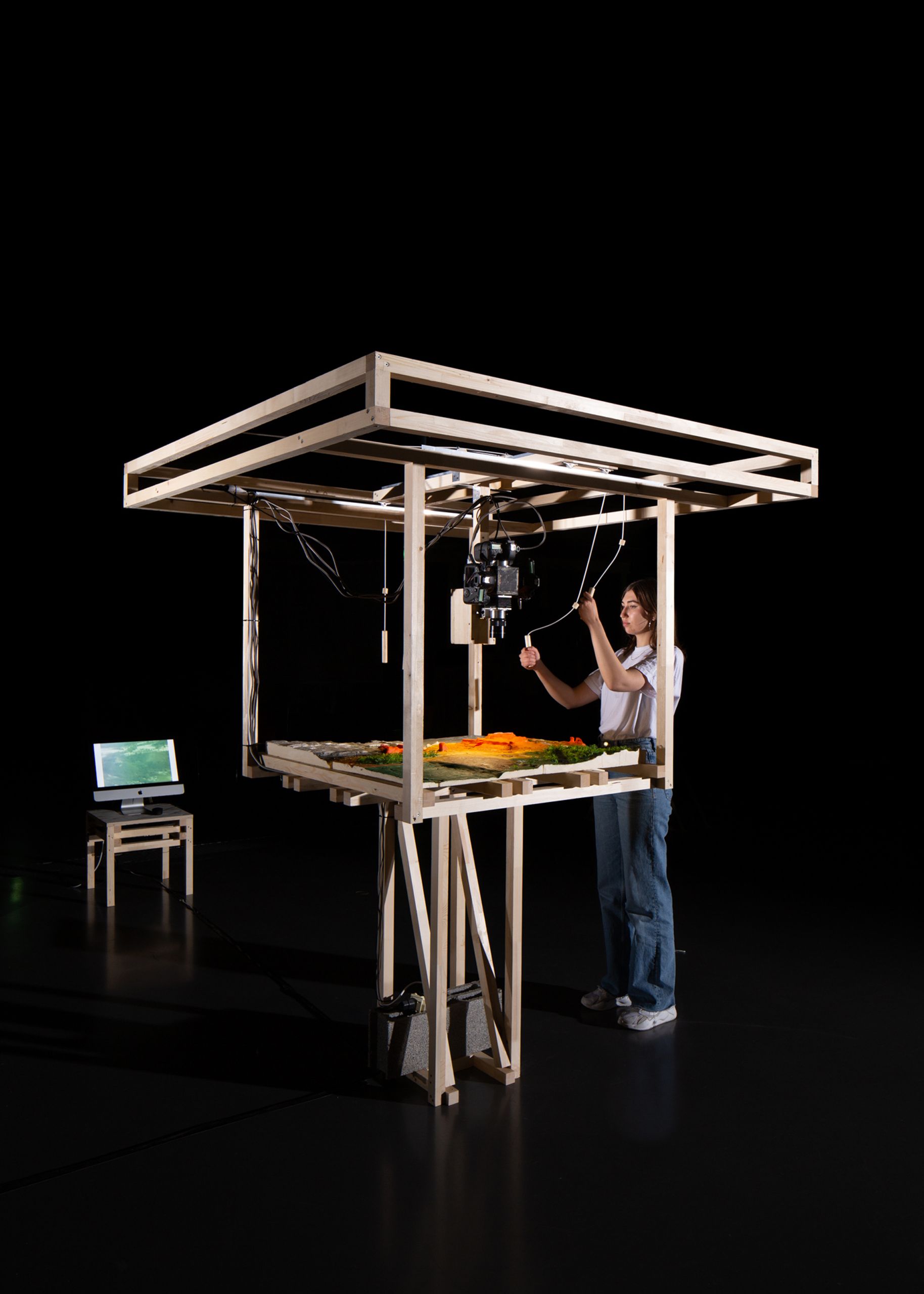
A structure includes a camera system arranged in order to film, from above, a diorama of the terrain of the previous simulation. This system can be operated by the spectator with ropes. This installation allows to experiment the vertical shooting of the landscape so representative of aerial technologies becomed new standard to represent inaccessible territories.
The triple-camera device:
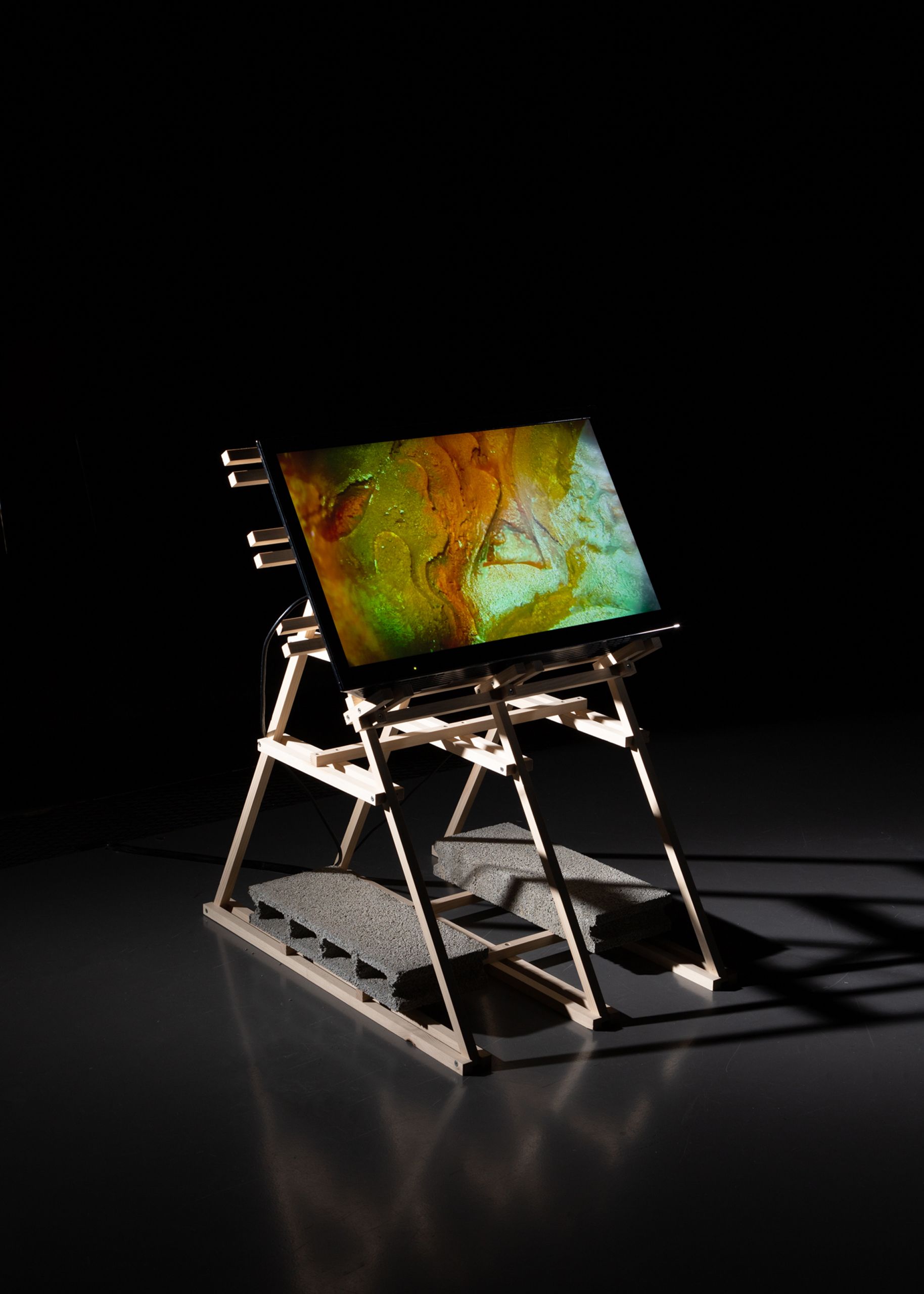
Video streams of the diorama are captured by a tinkered camera that reproduce the first stable technology that allows color filming. The device is composed of a prism which separates the image in three colorimetric versions. The superposition of these three colored layers allows the creation of a color film by adapting the trichromatic process developed by Technicolor, from 1928, to the standards of the digital domain.